The S&P 500 just posted its fifth straight losing week (the longest losing streak since 2022) as a toxic combination of war-driven oil shock, stagflation fears, and a collapsing tech sector pushed all three major indexes to seven-month lows. The S&P 500 rose 2.91% to 6,528.52 on Tuesday, the Dow Jones Industrial Average gained 1,125 points, closing at 46,341.51, and the Nasdaq Composite rose 3.82% to 21,590.63, now down nearly 13% from its October record high. The VIX fell to 25.25, gold hit a record $4,524, and the Magnificent Seven lost over $330 billion in market cap in a single session. This is what capitulation looks like, and the question every investor needs to answer right now is whether it gets worse before it gets better.
Key Takeaways
- S&P 500: Closed at 6,528.52 (+2.91%) on Tuesday — sharp rebound from five-week losing streak.
- Dow Jones: Gained 1,125 points (+2.49%) to 46,341. Markets rallying on easing Iran tensions.
- VIX: Dropped 17.52% to 25.25 — pulling back from fear extremes. Still elevated above 20.
- Oil Shock: Brent crude at $105.41/bbl and WTI at $103.09 as Trump April 6 deadline approaches.
- Recession Risk: Moody's AI model at 49% probability — one point below the threshold that has preceded every recession in 80 years. Goldman Sachs at 30%.
- Next Catalyst: April 6 Trump deadline for Iran, followed by March jobs report (April 4) and FOMC meeting April 28–29.
Last updated: April 1, 2026. All data reflects the Tuesday, March 31 closing session.
In This Article
Stock Market Today, Closing Data (March 31, 2026)
Why the Stock Market Is Crashing Right Now
Friday’s selloff was not a single-catalyst event, it was the culmination of four compounding forces that have been building for weeks and finally broke through the market’s remaining support levels.
The Iran war is choking global oil supply. The Strait of Hormuz, the narrow waterway through which roughly one-fifth of the world’s oil supply transits, has been largely blocked to tanker traffic for weeks. President Trump extended his deadline for military action against Iranian energy infrastructure to April 6, but blasts in the strait on Friday dented tanker flows further and sent Brent crude surging to $112.57 per barrel. Iran has rejected the U.S. ceasefire proposal, and markets are pricing in the increasing likelihood that this conflict drags into Q2 2026 with no diplomatic resolution. Every dollar that oil rises above $100 functions as a tax on consumers and a margin compressor for corporations, feeding directly into the next force driving the crash.
Stagflation is no longer a theoretical risk, it is becoming the base case. The OECD raised its U.S. 2026 inflation forecast to 4.2%, up sharply from the prior 2.8% estimate, driven almost entirely by energy costs. At the same time, economic growth indicators are softening under the weight of higher input costs, consumer spending pressure from $4.50+ gasoline, and corporate margin compression. The 10-year Treasury yield surged to 4.44% (its highest level in eight months) as bond markets price in the possibility that inflation will prove sticky enough to prevent rate cuts and possibly force the Fed to hike. Stagflation (the combination of high inflation and stagnant growth) is the one macroeconomic scenario where almost nothing works as a safe haven.
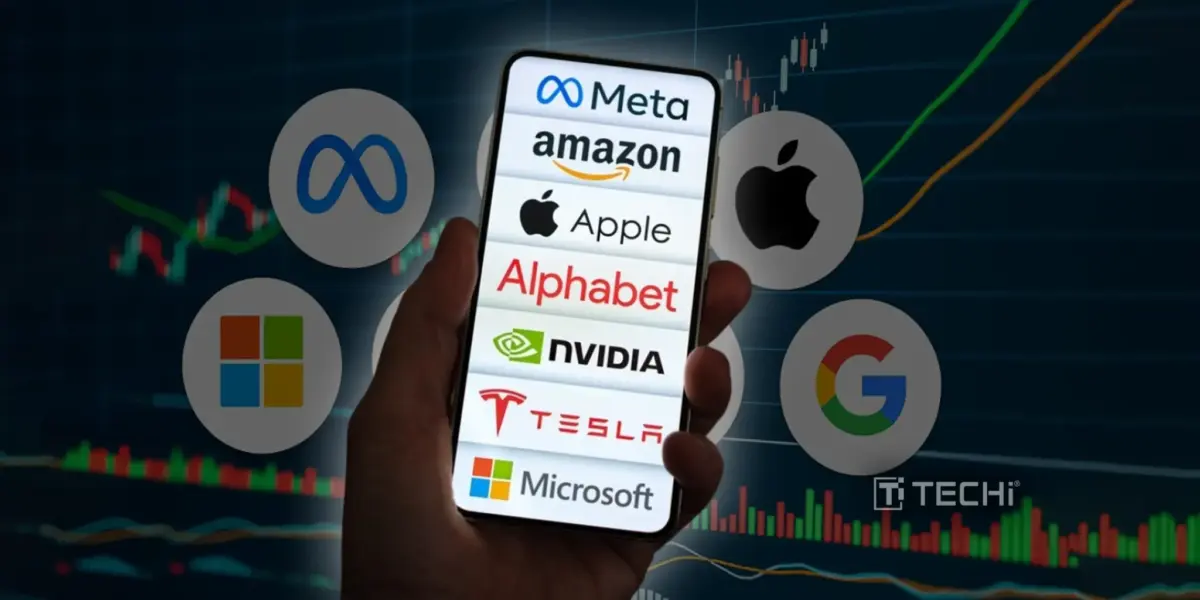
The Magnificent Seven are getting destroyed. The seven largest technology stocks collectively lost over $330 billion in market cap on Friday alone. Meta Platforms fell 4% on its ongoing legal liabilities, Alphabet dropped 2.5%, Microsoft sank 2.5%, and Nvidia declined 2.2%. Tesla, Amazon, and Oracle all fell more than 3%. The Nasdaq’s 13% decline from its October high officially places it in correction territory. Investors are rotating aggressively out of growth and AI-related stocks into energy, defense, and gold, the classic fear trade. The selloff in tech is particularly painful because these seven stocks represent approximately 30% of the S&P 500’s total market capitalization, meaning their decline drags the broader index down even when other sectors hold up.
The VIX is screaming danger. The CBOE Volatility Index surged 13.16% to 31.05 on Friday, well above the 20 threshold that separates normal volatility from elevated fear and firmly in territory associated with market stress. Readings above 30 have historically coincided with major selloff events including the COVID crash in March 2020, the bank crisis in March 2023, and the tariff panic of April 2025. The VIX above 30 signals that institutional investors are aggressively buying portfolio protection through options, a sign that professional money managers expect further downside.
Moody’s recession model is flashing its loudest warning in decades. Moody’s Analytics reported that its AI-driven recession indicator hit 49% probability for the next 12 months, just one percentage point below the 50% threshold that has preceded every U.S. recession in 80 years of backtesting. Chief economist Mark Zandi warned that the model has never reached this level without a recession following, and that if oil prices remain elevated for “weeks and not months, a recession will be difficult to avoid.” The February jobs report showed 92,000 jobs lost, and Q4 GDP was revised down to 0.7% from an initial 4.4% in Q3.
A partial government shutdown is compounding consumer anxiety. The Department of Homeland Security has been unfunded since February 14, leaving over 60,000 TSA officers working without pay during the busiest spring break travel season in years. More than 500 TSA officers have quit, callout rates spiked above 50% at some airports, and security wait times exceeded three hours at major hubs. On Friday, Trump signed an executive order directing DHS to pay TSA workers using emergency funds, with paychecks expected by Monday, but the broader shutdown standoff between House and Senate remains unresolved. The disruption is hitting consumer confidence at precisely the worst moment, layering domestic dysfunction onto the geopolitical crisis.
China escalated the trade war on Friday. Beijing launched two retaliatory trade probes into U.S. trade practices, targeting American restrictions on Chinese goods and barriers to Chinese green energy exports. The probes, a direct response to Trump’s Section 301 investigations launched earlier this month — are widely seen as China preparing a legal basis for fresh tariffs ahead of Trump’s delayed visit to Beijing. The timing compounded Friday’s selloff by reinforcing the stagflation narrative: a simultaneous oil shock and trade war escalation is the worst possible combination for corporate margins and global supply chains.
Sector Breakdown: Winners and Losers
The stock market today is experiencing one of the sharpest sector rotations in years. Capital is flowing from growth and technology into hard assets and defensive sectors at a pace not seen since the COVID recovery rotation in late 2020.
| Sector | Friday | Weekly | YTD | Key Movers |
|---|---|---|---|---|
| Energy | +2.8% | +4.5% | +41% | XOM +3.4%, CVX +1.6%, HAL +4% |
| Utilities | +0.4% | +0.8% | +5.2% | Defensive rotation, yield plays |
| Consumer Staples | +0.2% | +0.5% | +4.8% | Recession-proof names bid up |
| Financials | −1.1% | −1.8% | −4.2% | JPM −1.3%, rate uncertainty |
| Healthcare | −0.8% | −1.2% | −2.1% | Defensive but hit by broad selling |
| Industrials | −1.5% | −2.1% | −3.8% | Manufacturing margin squeeze |
| Consumer Discretionary | −2.4% | −3.1% | −11.2% | TSLA −3.2%, AMZN −3.9% |
| Technology | −2.1% | −3.5% | −11.8% | NVDA −2.2%, MSFT −2.5% |
| Communication Svcs | −2.8% | −4.2% | −13.5% | META −4%, GOOGL −2.5% |
The message from the sector data is unambiguous: investors are selling anything tied to growth, AI, and consumer spending, and buying anything tied to hard assets, energy production, and defensive income. Energy stocks are now up over 41% year-to-date while technology is down nearly 12% — a 53-percentage-point spread that would have seemed unthinkable in January when AI-driven tech stocks were making new highs daily. The Dow’s biggest losers on Friday were Amazon (−3.85%), Salesforce (−3.41%), and Visa (−3.38%). The biggest gainers were Chevron (+1.6%) and Merck (+0.4%).
What Goldman Sachs and Wall Street Are Saying
The mood on Wall Street has shifted from cautious optimism to outright defensive positioning in the span of a single week.
Goldman Sachs raised its U.S. recession probability to 30%, up from 25% the prior week. Their economics team cited the combination of $100+ oil acting as a de facto tax increase, the Federal Reserve’s inability to cut rates with inflation surging, and the deterioration of consumer sentiment. The firm lowered its year-end S&P 500 target to 6,800 from 7,100, implying roughly 7% upside from current levels — still positive, but a significant downgrade from the 10-12% returns that had been the consensus heading into the year.
JPMorgan’s Marko Kolanovic recommended clients increase cash allocations to 15% of portfolios, the highest defensive recommendation from JPM since the 2022 bear market. The firm specifically warned against buying the dip in technology stocks until there is clarity on the Iran conflict’s duration and its impact on corporate earnings guidance in the upcoming Q1 reporting season.
Macquarie Research issued the most alarming forecast, projecting that oil could reach $200 per barrel if the Hormuz blockade continues through June. At that level, analysts estimate the U.S. economy would enter a technical recession within two quarters, corporate earnings would decline 10-15%, and the S&P 500 could test the 5,500-5,800 range — approximately 10-14% below current levels.
Bank of America’s fund manager survey showed the largest overweight in energy stocks since 2008 and the largest underweight in technology since 2022 — a positioning extreme that historically precedes a sharp rotation once the catalyst changes.
Fed Rate Outlook: Rate Hikes Are Back on the Table
The most alarming development for the stock market this week was not the index declines — it was the shift in interest rate expectations. For the first time since the tightening cycle ended in 2024, the CME FedWatch tool is pricing in a greater than 50% probability that the Federal Reserve will raise rates in 2026.
Rate hike probability hit 52% on Friday — a stunning reversal from January, when markets were pricing in two to three rate cuts for the year. The driver is oil-fueled inflation. With the OECD forecasting 4.2% headline CPI and the Fed’s own 2% target looking increasingly distant, the central bank faces an impossible choice: cut rates to support a weakening economy and risk letting inflation spiral, or hold rates steady (or hike) and accept the economic damage that follows.
The 10-year Treasury yield at 4.44% tells the bond market’s story. Yields are rising because investors are demanding more compensation for inflation risk, and higher long-term rates directly pressure stock valuations by raising the discount rate applied to future corporate earnings. Growth stocks, which derive most of their value from earnings expected years in the future, are hit hardest, which explains why the Nasdaq is underperforming the Dow by a wide margin in the selloff.
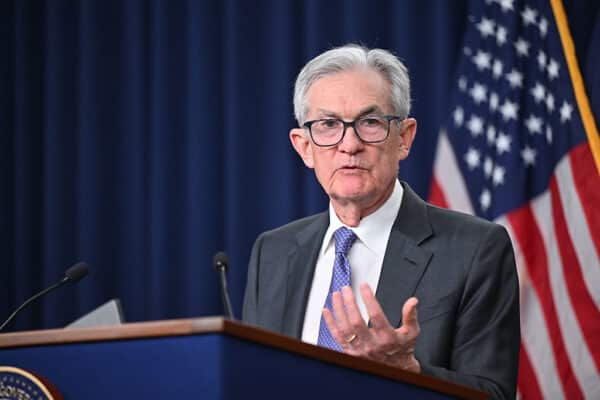
Friday’s PCE inflation data (the Fed’s preferred measure) will be the next major data point. Core PCE above 3% would cement the hawkish narrative and could push rate hike probability toward 60-70%. A reading below 2.8% would offer some relief and potentially stabilize risk assets heading into Q1 earnings season.
The next FOMC meeting is April 28–29, where the Fed will weigh whether oil-driven inflation warrants a policy response or represents a transitory supply shock that should be “looked through.” The OECD has recommended the latter approach, arguing that supply-driven energy inflation should not trigger rate hikes if expectations remain anchored, but with headline CPI at 4.2% and rising, the Fed’s patience is being tested.
What to Watch Next Week
The week of March 30 brings several events that could determine whether the selloff intensifies or finds a floor.
Monday, March 30: Markets reopen after a weekend that could bring Iran-related developments. Any escalation or de-escalation over the weekend will gap futures at Sunday evening’s open. Lululemon and Chewy report earnings after the bell.
Tuesday, March 31: Nike reports Q3 earnings before the bell. Nike is a bellwether for consumer spending — weak guidance would reinforce recession fears, while a beat could signal that the consumer remains resilient despite higher gasoline prices. The Conference Board Consumer Confidence Index also drops Tuesday.
Wednesday, April 1: ISM Manufacturing PMI. A reading below 50 would signal manufacturing contraction and add fuel to recession fears. ADP private payroll data for March.
Thursday, April 2: Weekly jobless claims. ISM Services PMI — services represent 70% of the economy, so this reading carries more weight than the manufacturing number.
Friday, April 4: The March jobs report (non-farm payrolls) from the Bureau of Labor Statistics. This is the week’s most important release. A miss below 150,000 jobs would spike recession odds sharply higher. Wage growth above 4.5% would reinforce the stagflation thesis.
Sunday, April 6: Trump’s extended deadline for Iran to reopen the Strait of Hormuz. This is the binary event that hangs over every market in the world. A breakthrough sends oil crashing and stocks surging. An escalation sends oil toward $120+ and stocks into bear market territory.
YTD Market Performance: The 2026 Scorecard
2026 has been a year of broken narratives. January opened with the S&P 500 hitting a new all-time high above 7,000 on AI optimism and rate cut expectations. Then came the double shock: Trump’s tariff escalation in February triggered a 10% correction before markets could recover, and the Iran conflict erupted on March 1, layering a 6% energy-driven decline on top of the tariff damage.
| Asset Class | YTD Return | Trend |
|---|---|---|
| Energy Stocks (XLE) | +41% | Leading all sectors |
| Gold | +19% | Record highs on fear |
| Crude Oil (WTI) | +41% | Hormuz disruption |
| Consumer Staples | +4.8% | Defensive rotation |
| Cash / T-Bills | +1.2% | Outperforming stocks |
| Dow Jones | −5.4% | Entered correction |
| S&P 500 | −6.2% | Fifth losing week |
| Nasdaq | −9.8% | In correction (−13% from high) |
| Russell 2000 | −14.1% | Small-cap bear territory |
| Bitcoin | −29% | Risk-off selling |
The 53-percentage-point spread between energy stocks (+41%) and the Nasdaq (−9.8%) is the largest sector divergence since at least 2008. Cash and Treasury bills are outperforming the S&P 500 — a reminder that in environments like this, not losing money is itself a winning strategy.
The Bull Case vs. the Bear Case
The bull case for buying the dip: Historically, the S&P 500 has generated above-average returns in the 12 months following geopolitical selloffs. The index is trading at roughly 19 times forward earnings — below the five-year average of 21 times, suggesting that some of the bad news is already priced in. The April 6 Iran deadline could produce a breakthrough that sends oil crashing and triggers a fierce relief rally. Earnings season beginning in mid-April could also provide a positive catalyst if companies report resilient results. Goldman still sees 7% upside from current levels to its revised 6,800 year-end target. For long-term investors, the combination of lower prices and elevated fear often marks attractive entry points.
The bear case for staying defensive: Stagflation environments have historically been the worst for equity returns — worse than recessions alone, because the Fed cannot ride to the rescue with rate cuts when inflation is elevated. The rate hike probability at 52% signals that monetary policy could actually tighten from here, which would be devastating for an economy already weakened by $100+ oil. Macquarie’s $200 oil scenario, if realized, would push the S&P 500 to 5,500-5,800 — another 10-14% below current levels. The Mag Seven still carry stretched valuations relative to their now-declining earnings momentum, meaning the rotation out of tech could accelerate rather than reverse. Smart bears are not selling everything — they are shifting to energy, gold, utilities, and cash while waiting for either a ceasefire or a clear earnings bottom before re-engaging with growth stocks.
What Moves the Stock Market
Understanding what drives the stock market today requires knowing the fundamentals that apply in every environment. Interest rates are the single most important variable. When the Federal Reserve raises rates, borrowing costs increase across the economy, corporate earnings face pressure, and stocks typically decline. When rates fall, the opposite occurs. Corporate earnings provide the fundamental valuation anchor. The S&P 500’s collective earnings determine whether the market is cheap or expensive relative to history. Inflation erodes purchasing power and forces the Fed to tighten policy, creating a headwind for equities. Currently, oil-driven inflation is the primary concern. Geopolitical events inject uncertainty, which markets hate. The Iran conflict demonstrates how a regional war can ripple through global energy markets, supply chains, and investor confidence within days.
U.S. Stock Market Hours and Holiday Schedule
The New York Stock Exchange and NASDAQ operate Monday through Friday. Regular trading runs from 9:30 AM to 4:00 PM Eastern Time. Pre-market trading opens at 4:00 AM ET, and after-hours trading extends to 8:00 PM ET. The market closes on nine federal holidays: New Year’s Day, Martin Luther King Jr. Day, Presidents’ Day, Good Friday, Memorial Day, Juneteenth, Independence Day, Labor Day, Thanksgiving, and Christmas Day. On the days before Independence Day, Thanksgiving, and Christmas, markets close early at 1:00 PM ET.
Frequently Asked Questions
Is the stock market crashing in 2026?
The stock market is in a correction but not a crash. As of March 27, 2026, the S&P 500 is down approximately 6.2% year-to-date and 9% from its January all-time high. The Nasdaq is in correction territory, down 13% from its October record. The Dow Jones just entered correction territory after dropping 793 points on Friday. While the declines are significant, a crash typically implies a 20%+ decline in a short period. The current selloff is driven by the Iran war, $100+ oil prices, and stagflation fears. The VIX at 31 signals elevated fear but not panic-level readings above 40 that accompany true crashes.
Should I sell my stocks right now?
For long-term investors with diversified portfolios, selling during geopolitical selloffs has historically been a losing strategy. The S&P 500 has recovered from every major geopolitical event in history, typically within 6 to 12 months. However, tactical adjustments make sense. Reducing exposure to the highest-risk sectors (speculative tech, unprofitable growth companies) and increasing allocations to energy, utilities, gold, and cash can reduce portfolio volatility while maintaining market exposure. The key is to avoid panic selling at what could be a near-term bottom while also not assuming the selloff is over.
What caused the stock market drop this week?
Four factors caused the market drop during the week of March 24-27, 2026: (1) The Iran war intensified as Iran rejected the U.S. ceasefire proposal and blasts in the Strait of Hormuz disrupted tanker flows, sending Brent crude above $112. (2) The OECD raised its U.S. inflation forecast to 4.2%, stoking stagflation fears. (3) Rate hike probability surged above 52% on CME FedWatch for the first time, signaling the Fed may tighten rather than ease. (4) Goldman Sachs raised recession odds to 30%, triggering institutional selling across technology and growth stocks. The Magnificent Seven lost over $330 billion in market cap on Friday alone.
Will the stock market recover in 2026?
Recovery depends primarily on the Iran conflict’s resolution. Goldman Sachs projects the S&P 500 reaching 6,800 by year-end (roughly 7% upside from current levels), assuming a diplomatic resolution by mid-year and oil returning to the $80-90 range. If the conflict extends through Q2 and oil stays above $100, the market could test 5,800-6,000 before recovering. Historically, every geopolitical selloff since 1990 has been followed by positive 12-month returns. The key catalyst to watch is the April 6 Trump deadline for Iran, followed by Q1 earnings season beginning mid-April.
What are the best stocks to buy during a market crash?
During market corrections driven by geopolitical events and energy shocks, the strongest performers have historically been energy stocks (ExxonMobil, Chevron, ConocoPhillips), defense contractors (Lockheed Martin, RTX, Palantir), gold miners, and utility companies. For long-term investors looking to buy quality names at a discount, blue-chip technology stocks like Microsoft, Apple, and Nvidia typically offer the best 12-month forward returns when purchased during correction-level pullbacks. Dollar-cost averaging over 4-8 weeks rather than making a single large purchase helps manage the risk of further downside.
What time does the stock market open and close?
The U.S. stock market (NYSE and NASDAQ) opens at 9:30 AM Eastern Time and closes at 4:00 PM ET, Monday through Friday. Pre-market trading begins at 4:00 AM ET and after-hours trading extends to 8:00 PM ET. Stock futures trade nearly 24 hours on weekdays and reopen at 6:00 PM ET on Sunday evening. The market closes on nine federal holidays and closes early at 1:00 PM ET on the days before Independence Day, Thanksgiving, and Christmas.
For deeper analysis, explore our guides to the best oil & energy stocks, best AI stocks, tech stocks, oil prices today, Nvidia stock, Tesla stock, Meta stock, Microsoft stock, and Palantir stock.
About TECHi®: TECHi (TECH Intelligence) delivers expert analysis of AI stocks, Magnificent 7 earnings, cryptocurrency markets, and emerging technology. Our investment coverage combines Wall Street-grade financial analysis with deep technical understanding. Learn more about our editorial standards.
Fatimah Misbah Hussain covers U.S. equity markets, macroeconomic trends, and Federal Reserve policy for TECHi. Her daily analysis tracks how geopolitical developments translate into market-moving events for investors.
Disclaimer
This article is for informational purposes only and does not constitute financial advice, investment recommendations, or an endorsement to buy, sell, or hold any securities. All investment decisions should be based on your own research and consultation with a qualified financial advisor. The data and analysis presented here reflect publicly available information at the time of writing and may not reflect the most current market conditions. Past performance does not guarantee future results. Stock investments carry risk, including the potential loss of principal. TECHi and its authors may hold positions in securities discussed in this article.